• Skip to main content

The Shakti School

Feminine Form Sacred Technology

  • About
  • Blog
  • Glow-Worthy
  • Ayurveda
  • Subscribe
  • Podcast
  • Book a Call
  • Free Course
  •  

wellness

Sacred Cycle Sweets

Blog Featured Image (1200 × 628 px) (1)

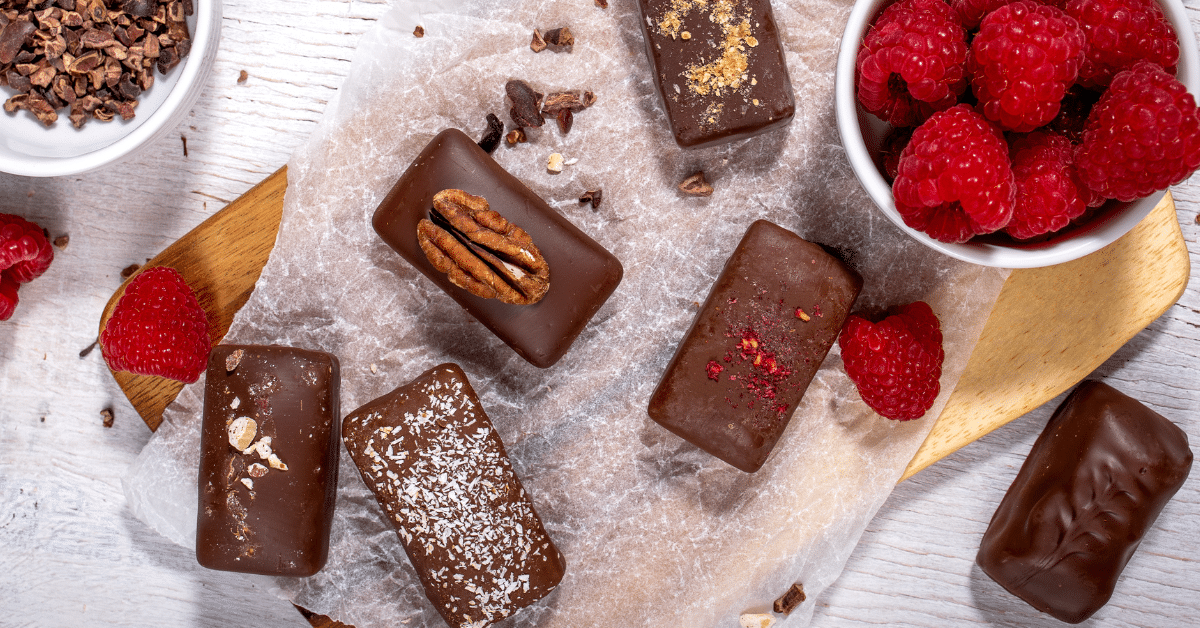
Cooling, grounding and hormone-nourishing, these Sacred Cycle Sweets weave together shatavari, fennel and cardamom to support women’s cycles while offering a naturally sweet treat for body and spirit.

Here's How to Make My Sacred Cycle Sweets:

Ingredients (makes ~10):

  • 1 cup shredded coconut
  • ½ cup cashews, soaked 2 hrs
  • 6 Medjool dates
  • 1 tsp shatavari powder
  • 1 tsp cardamom
  • ½ tsp fennel powder
  • 1 tsp vanilla extract
  • Pinch pink salt
  • 1 tbsp coconut oil

Instructions:

  • Blend cashews + coconut into a paste.
  • Add dates, shatavari, spices + vanilla. Process until dough forms.
  • Roll into balls, coat with extra coconut. Refrigerate.
Continue Reading

Raspberry Oat Hormone Bars

Blog Featured Image (1200 × 628 px) (1)

Sweet, tart and chocolatey comfort! These bars blend magnesium-rich nuts, fiber-filled oats, and antioxidant raspberries to steady mood, ease PMS cravings, and nourish your hormones the Ayurvedic way.

Here's How to Make Them:

Ingredients (makes ~12 bars):

Base:

  • 1 cup rolled oats (ground to flour)
  • ½ cup walnuts or almonds (magnesium powerhouse)
  • 1 cup Medjool dates, pitted
  • 2 tbsp almond butter
  • Pinch sea salt

Raspberry Layer:

  • 1½ cups fresh or frozen raspberries
  • 2 tbsp chia seeds
  • 1 tbsp maple syrup
  • ½ tsp vanilla

Chocolate Topping:

  • ½ cup dark chocolate chips (at least 70%)
  • 1 tbsp coconut oil
  • Sprinkle of cinnamon

Instructions:

  1. Process oats, nuts, dates, almond butter + salt until dough forms. Press into pan.
  2. In a saucepan, simmer raspberries, chia, maple + vanilla for 10 minutes until jammy. Spread over base.
  3. Melt chocolate + coconut oil, stir in cinnamon, and pour over raspberry layer.
  4. Chill until firm, slice into bars.
Continue Reading

How to Make the Perfect Summer Salad

Blog Featured Image (1200 × 628 px) (1)

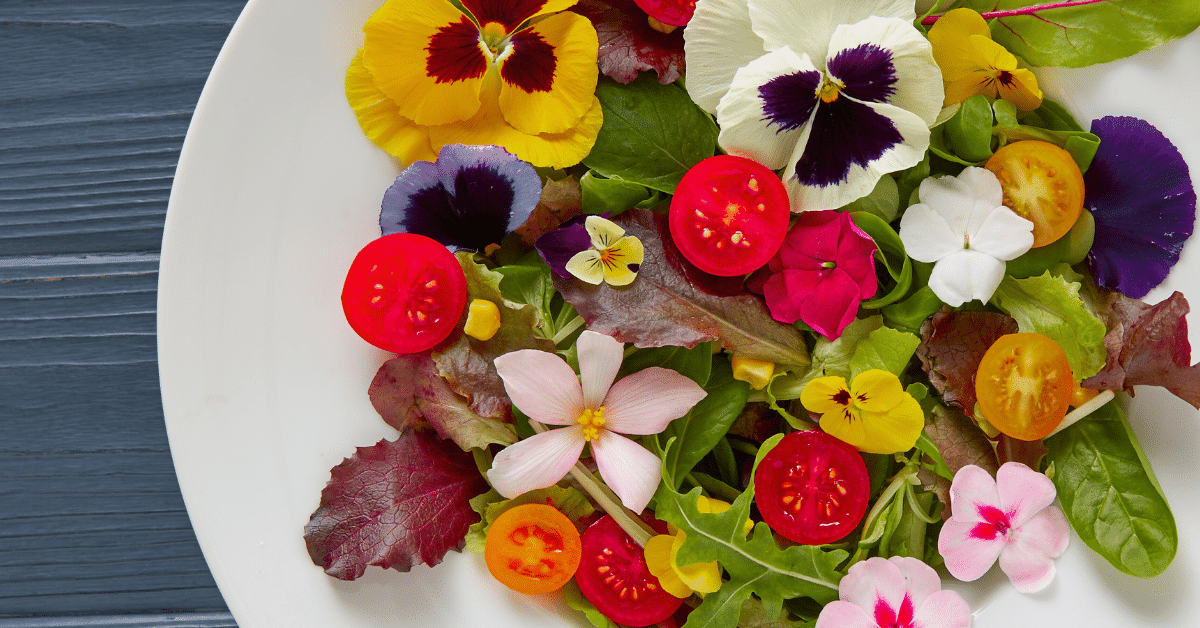
Summertime is the time for salad—the possibilities are endless. 🌺🌱🍅 In the Virginia summers, greens grow in abundance, fruit starts popping off and there are edible flowers galore! It’s one of my favorite times of the year. ⁠

Of course Ayurveda suggests not over consuming raw food, but there are plenty of ways around this. Salads are appropriate in the hot summer months and if your digestive system is a little sluggish, you can always pair your greens with a cooked element or additional spices to support your specific needs. ⁠
⁠
I love going to the farmer’s market in the summer and seeing what creations I can make with the various colors and shapes of the vegetables. Making food should feel like an art (of course it’s not always going to feel easy), but it is an act of creativity that can really serve you well. ⁠
⁠
When it comes to making salads you can get really creative. Just simply think of what flavors and textures you love most and create a salad from that. For me, I love crunch, I love FAT and I love citrus. I usually end up making a big bowl of greens, some sort of seed sautéed in ghee, avocado, radishes and all of it topped with a lemon vinaigrette. I often will always add some sort of protein source. Grilled chicken, fried tempeh and hard boiled (farm fresh eggs) are all my favorite go-to forms of protein.

Here's How to Make my Perfect Summer Salad:

Salad Ingredients:

  • ½ cup cooked quinoa
  • 1 ½ cups summer greens (mix of your choice-diced)
  • 1 tbsp lightly toasted pumpkin seeds
  • ½ cup summer cherry tomatoes (halved)
  • 1 handful of summer sprouts
  • Optional protein add ons: ¼ cup cooked chickpeas or grilled chicken

Dressing Ingredients:

  • 1 tbsp vegan mayo
  • ¼ cup fresh mint & parsley mix (diced)
  • Salt and pepper to taste
  • 1 tbsp apple cider vinegar

Directions:

Assemble all of your salad ingredients into a bowl (except the sprouts) organizing however you would like. Whisk dressing ingredients in a bowl using a fork (adding more or less apple cider vinegar depending on preference). Generously pour dressing over the salad. Garnish with fresh edible flowers and sprouts!

Enjoy! 🥬🌱🍅🌼

Continue Reading

Ayurvedic Tips For Allergy Season

Blog Featured Image (1200 × 628 px) (1)

Two more of my fave supports for allergy season are quercetin (studies have shown that quercetin can prevent immune cells from releasing histamines which means runny nose, hives and swelling = bye bye 👋🏼) and Green Tea (‘cause it’s high in quercetin 😉). ⁠
⁠
Ayurveda understands that allergies are the result of an outer allergen aggravating a specific dosha. ⁣⁠Seasonal allergies related to spring (and sometimes fall) are usually more kapha-related.⁣⁠
⁣⁠
In order to aid our kapha allergies, we have to heat things up, boost circulation, clear out the channels of the body and support our system’s natural cleansing pathways (think lymph flow, circulation, digestion and elimination!).⁣⁠

Here are some more of my favorite tips for allergy season:

  • Get a Neti Pot and use it daily! Add ¼ tsp salt to warm water and pour through both nostrils.
  • Follow your Neti Pot with Nasya Oil to lubricate your nostrils with herbal oil.
  • Scrape your tongue. Scraping your tongue helps to remove the ama that your body is cleansing through the night.
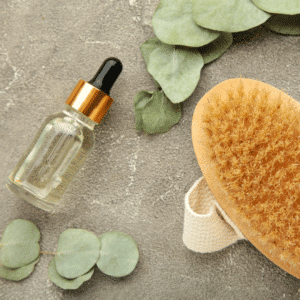
  • Dry Brush. Dry brushing boosts the lymphatic system–this helps the channels of the body circulate and eliminate toxins.
  • Drink your nettles. Nettles promote healthy circulation and activate the liver and kidneys. 

And if you really want to get ahead of things, start doing some of these practices before allergy season hits to improve your overall immunity. 🌸⁠

P.S. Here’s how I make my nettles infusion: Brew a tea by combining 4 large tablespoons of dried nettles in a mason jar with boiling water - let steep for 1 hour and then strain! Enjoy! 🌿

Continue Reading

How to Dry Brush the Ayurvedic Way

Blog Featured Image (1200 × 628 px) (1)

Why Dry Brush?

Dry Brushing (traditionally called garshana) helps move stagnation, stimulates Rasa Dhatu’s flow, boosts our natural detoxification system and gives the skin that GLOW we all want! 🌟⁠
⁠
In Ayurveda, our lymph is part of the Rasa Dhatu, one of the 7 tissues of the body.⁠
⁠
The lymph and blood plasma serve as the first line of immune defense when we encounter allergens and bacteria. Not only does the lymphatic system serve as immune defense, it also serves as psycho-emotional defense (AKA how easily we can let things roll off us, rather than deeply penetrate and wound us, on an emotional level). 🫀⁠
⁠
Unlike your blood, which is pumped throughout your body by your heart, your lymph relies on your body’s valve system to move, functioning more like a manual pumping system. This is where practices like dry brushing and Abhyanga come in - they help literally “pump” the lymph! 💪🏽⁠
⁠

Brush Towards the Heart

It's best to use a dry brush on dry skin before you take a bath or shower. Start at your feet and work your way upwards. Brush in a circular motion always in the direction of your heart. This will help increase blood flow throughout the body.

Follow Up with Moisture

Try to brush for at least 3 minutes working your way up to 5 minutes. After showering, make sure to lather yourself in some kind of amazing moisturizer or use your dry brush right before you Abhyanga, allowing the oil to be deeply absorbed into your revived skin.


Spring is an amazing time for dry brushing, boosting your body’s natural detoxification system and even giving you a freshened-up, more vigorous outlook on life. 😉

Continue Reading

Beet & Chickpea Hummus

Blog Featured Image (1200 × 628 px) (1)

To further support you during this kapha season, I want to offer up one of my go-to recipes for one of my favorite grounding veggies: the beet! ⁠
⁠
Beets are loaded with health benefits and when I eat them regularly I feel like I have some sort of super strength. ⁠
⁠
Their rich color is a key indicator of their richness in antioxidants and anti-inflammatory effects on the body. ⁠
⁠
In Ayurveda, beets can be eaten in abundance by all doshas as long as they are prepared appropriately. Vata & pitta individuals can tolerate cooked beets more so than kapha. If you are prone to have more kapha, try adding a little extra mustard seed and black pepper to your beets. ⁠
⁠
Other benefits of beets include: ⁠
⁠
🫜 Improves circulation ⁠
⁠🫜 Supports healthy skin⁠
⁠🫜 High in iron ⁠
⁠🫜 Good for liver detoxification ⁠
⁠🫜 Cleanses the blood ⁠
⁠🫜 Good for the brain ⁠
⁠
I love making all sorts of dishes with beets. I’ve added beets to chocolate cakes, roasted them for salads, hummus and dressings, and have even added them to smoothies. The possibilities are endless when it comes to the beet! ⁠

Now let's get into the recipe:

Ingredients: 

  • 1-2 beets (already roasted or boiled)
  • 1 can of chickpeas drained (or you can use 1 cup freshly cooked/drained chickpeas)
  • 1 juiced lemon
  • 1 tsp salt
  • 1 tsp pepper
  • 2 large cloves garlic
  • 3 Tbsp tahini (if you’re looking for an even more kapha-friendly version, you can use sunflower seed butter)
  • ¼ water
  • Olive oil for topping

Directions:

  • Add all the ingredients to a food processor (except for the olive oil). Blend until smooth (you may need to add more water to reach the desired consistency).
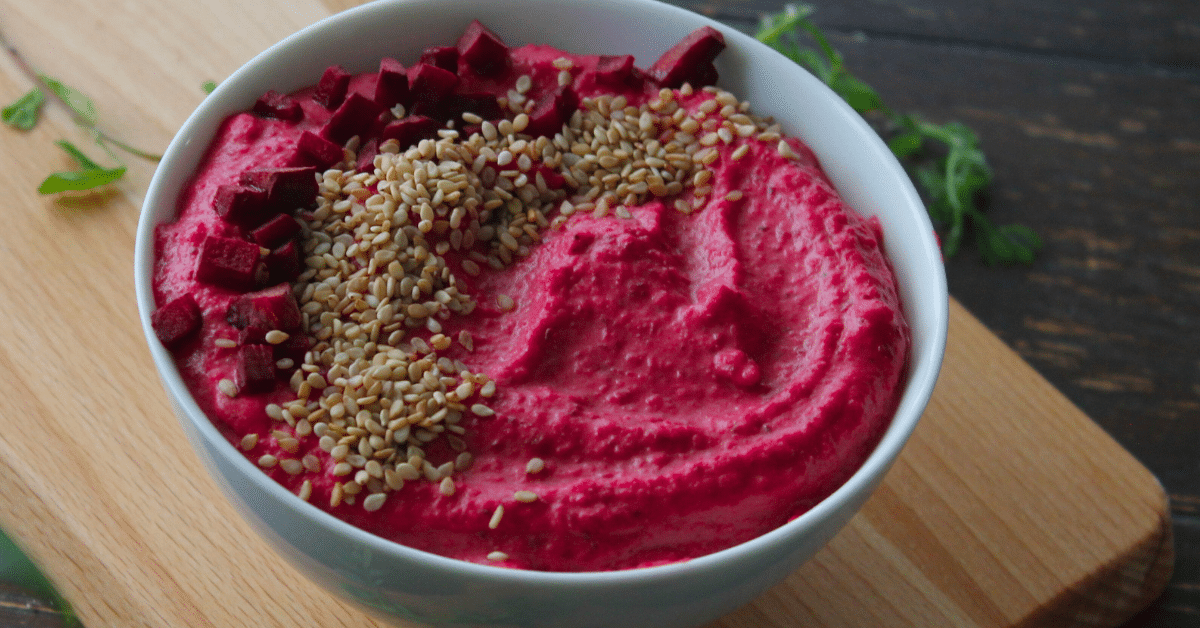
  • Top with a drizzle of olive oil, a little parsley or some sesame seeds!⁠

Save this recipe for the next time you need to spice up your dinner rotation or add some color to your plate. 😉🫜🌺🌿

Continue Reading

Rose + Mint Sun Tea

Blog Featured Image (1200 × 628 px) (1)

For this recipe, just let the sun do the steeping. 🌞 Steep dried rose petals and fresh mint in a glass jar under direct sunlight for a few hours. (No need to measure perfectly - just add what you’ve got on hand!) Sip room temperature or slightly chilled throughout the day to stay hydrated and soothe Pitta. What do you get? A cooling, heart-opening, Pitta-pacifying potion that’s as beautiful as it is nourishing.⁠
⁠
Here’s a little bit about how these plant allies help support us during the warmer months of the year…⁠
⁠
🌹 Rose - The ultimate flower of the Divine Feminine:⁠
⁠
• Cools the heat of both the body and our emotions (hi, Pitta spiciness 😅)⁠
• Soothes the heart and uplifts mood with its subtle, floral sweetness⁠
• Some studies have demonstrated that rose also has the potential to support the reproductive and nervous systems, and even impact dopamine levels⁠
⁠
🌿 Mint - The crisp, clarifying herb we all need in summer:⁠
⁠
• Helps to clear excess heat and inflammation from the gut and skin⁠
• Stimulates digestion without aggravating Pitta (exactly what we want!)⁠
• Awakens the mind while calming overactive fire in the head + heart 🔥⁠

Sip this floral elixir all day long to stay hydrated, radiant and keep your Pitta chilled out. Your inner fire goddess will thank you. 🧘🏼‍♀️

Continue Reading

Replacing Rules with Rituals and Learning To Truly Care for Myself

By Greer Christos

Blog Featured Image (1200 × 628 px)

I remember the first time I heard Katie say, "In Ayurveda, HOW we eat, is as, if not more important to what we eat.”

BOOM!

My entire body dropped knee length into the mud.

Held, supported... feeling like no matter how much I leaned to one side, mama earth’s wet, warm body had me. I would no longer be pushed over by external forces.

Of course, I wasn’t literally standing in a muddy pond, but I may as well have been.

I thought of alllllll of the times over all of the decades (3 in total!) I had been “battling” with what I should / shouldn’t eat, and “why” I should / shouldn’t be eating what I was.

I reflected on the synchronicities that had played out in the month prior to me going from “Ayur-whaaa?” to signing up to Shakti School Level 1 (& subsequently Level 2) & how the ease of what I was now receiving and truly ‘inner-standing’ (as opposed to ‘understanding) was one of those moments in time where everything shifts.

Despite thousands of hours of self-inquiry, talk-therapy, plant medicine, western-based psychology approaches, new-age/quantum activations, shamanic healings, (insert every healing modality you have heard of), I was still - STILL - struggling with letting go of the eternal-internal narrative of “why” am I STILL over eating and struggling with food addiction?

And whilst the above modalities & experiences had definitely helped with my chronic use of alcohol, drugs and general disassociation from my deeper needs & truth: the “food” thing still had me. And so, when Katie spoke those words in that sweet Southern accent of hers, it l a n d e d.

Yes in my mind, but more so in my body: and even more, in my Sacred heart.

It’s as if the burden of resisting food/bingeing (that I had become so used to carrying around and struggling to keep up above my head so I could continue searching for a way to be able to put it down), simply jumped out of my hands, arms & shoulders and vanished.

And so, for the next few months, I paid particular attention to HOW I was eating.
I stared to notice how I could rush my eating…
How I could hide…

How I could gobble & swallow almost whole…
How I would unconsciously tense my hands under the table when I was wanting a second serve but afraid of being judged…
How I would kid & shame myself about what I had eaten...
And on, and on, and on.

I also dived deeper back in to Geneen Roth’s work which was also really supportive, but what made it HEALING was the synergy of this increased awareness with my gradual, yet consistent and expanding devotion to practicing Dinacharya.

Up until being introduced to dinacharya, I had definitely gone through regular (but not necessarily consistent) waves of, what I had thought of was “self-care” but was actually a regime of exercise, meditation or other physical/mental/energetic practices. These periods had been helpful, activating, inspiring ~ for sure ~ but none of them lasting.

Yet something happened over the following two years, and I started to notice how as I cared for myself in this new way, I started to slow down, drop in, & gain a sense of ‘me’ on a day to day basis.

I would notice the days my skin was dryer, my tongue had more ama, my neti wouldn’t flow, and I would want to head straight to a cacao instead of my lemon-ginger water first thing.

I’d also notice the days I felt luscious, my tongue clear, my neti streamed effortlessly, and I’d embrace a full liter of warm fluids before anything else...

The practices were really great. They really were – and yet, after a while, I started to notice that even though these self-care practices were very nurturing, over time, they started to feel like “have-to’s”.

On the mornings I would have the time & space (I.e. when my 3 children would sleep in), it was wonderful. But sometimes they would wake early, or I would sleep in, & I would become subtly stressed that I wouldn’t have time to ‘get it all done’.

And I started to catch myself ‘rushing’ through my dinacharya. What had started as ritual, was gradually becoming a regime that, if I didn’t “tick off” would produce a subtle tension in my body & mind.
What started as an “ahhhhh” (insert relax tone of voice) was gradually becoming an “eeehhhhhhh” (insert rushed tone of voice).

And then it HIT me!!!

Just like food, HOW I practice my dinacharya is AS, if not MORE important than “what I do” for my dinacharya. And THAT, changed everything.

I suddenly realized that I don’t need to do it all. Sure, it’s great when I can. But if I find myself rushing, then I slow. If I find myself going on autopilot, I pause. I drop in to my body, & I open my heart, and ask,

“What is it I really need right this morning? In this moment?”

HOW could I love myself FULLY right, here, now?

Quite often, it’s just one or two practices done mindfully, heartfully.

S l o w l y.

And, perhaps unsurprisingly, it’s been since I’ve shifted HOW I self-care, that my relationship with food has truly healed.

Sure, sometimes I catch myself rushing, not fully chewing, etc. etc., but it happens so much less often. And when it does, I catch myself sooner, so there’s less fallout/casualties, and as I start my mornings in this slow & oh-so-yummy tempo,that echoes through my day which slows me down in all areas. And because I’m not rushing, I’ve got clarity of thought. I’m more patient with my kids. I can open more in my love-making.

And life, 
Once again,
Becomes Sacred.

About Greer

Greer is a Feminine Embodiment Guide, Conscious Relationship Coach, & Ayurvedic Wellness Counselor. Greer specializes in supporting women rise from depletion & overwhelm to reclaim their juicy, authentic self & cultivate sacred ritual as a way of life.

She currently resides in Tasmania, Australia where she’s raising her young family. She works alongside her husband Aaron in their business Tantra for Parents; offering a range of online & in-person workshops, Ceremonies, mentorships & retreats. You can find more info at her website at www.tantraforparents.com.


Continue Reading
  • Page 1
  • Page 2
  • Page 3
  • Interim pages omitted …
  • Page 5
  • Go to Next Page »

Footer Hero Widget

theshaktischool

TheShaktiSchool

When we try to define the feminine, we’re doing When we try to define the feminine, we’re doing our best to talk about that which really can’t be talked about. 

It can only be felt. 

It can only be experienced. 

You can start to meet the feminine by beginning to notice what’s happening in your body, what’s happening in your heart, what’s happening in your sensations, what’s happening in your emotions. 

When I start to share about the feminine with the women in our school, there is this thing that happens:

They have a recognition of something I’ve said that awakens something in them that they already knew. 

I just reminded them of what was already inside. 

And so if there’s one thing that the feminine is, it’s the wisdom in you that already knows how to heal herself, that already knows the things in your life that are weakening you and the things in your life that are strengthening you. 

That intuitive, deep wisdom, we call the feminine. 

Our approach to Ayurveda is honoring how this ancient method is rooted in folk wisdom that women have been practicing all over the world.

Women have been doing this root mother medicine for as long as we’ve been here.

And it all starts from this place of: you are the boss. 

You’re the authority on you. 

We want to provide a place and a practice and a method where you get to feel the part of you that’s the boss. 

When you start tapping into that part of you, you start to know this feeling of warmth and kindness, and that’s a good sign that you’re starting to enter into that wisdom realm. 

If you’re feeling the pull towards that remembrance… you would love our year-long Feminine-Form Ayurveda School. 

It’s a full immersion into your feminine intelligence and inner knowing, while studying the time-tested wisdom of Ayurveda in a way that honors women’s bodies, rhythms and lives.

Classes just started last week and it’s not too late to sneak in the door.

🌙 Comment AYURVEDASCHOOL to learn more.
The feminine isn’t here to do more. She’s here The feminine isn’t here to do more. She’s here to do what matters, slowly and intentionally.

When we try to overhaul our lives overnight, burnout is inevitable… and your higher self already knows this ;)

Feminine-form Ayurveda teaches you how to move with your rhythms, not against them. Less force, more wisdom, real sustainability. This is exactly why we built a whole school around women’s bodies, hormones and cycles.

It’s not too late to join us and begin 2026 in a way your nervous system can actually handle.

Comment AYURVEDASCHOOL to learn more. 🌿
💻 We are in the classroom at 2pm Eastern US Tim 💻 We are in the classroom at 2pm Eastern US Time today for our second class of the year in our Feminine-Form Ayurvedic Wellness Coach Certification Training…⁠
⁠
And it’s not too late to join us.⁠
⁠
In our training, we honor both forms of wisdom. The masculine form gives us structure, philosophy and foundational understanding. And the feminine form connects us to intuition, spontaneity and present-moment knowing. 🪔⁠
⁠
The Shakti School is not about an either/or approach. It’s a sacred both/and.⁠
⁠
We learn the principles of Ayurveda and we listen for what arises organically within the body, the moment and the mystery. ⁠
⁠
This is feminine-form education: embodied, alive and intuitive. 🌺⁠
⁠
This is a clip from the first class of the year and the full lecture is waiting for you inside the virtual classroom. ⁠
⁠
If you feel that heart nudge, know that it’s not too late. You can join us starting TODAY for our second class of the year (no catch-up necessary). Join us for a yearlong initiation into your feminine - you won’t regret it. ✨
Ayurveda is not just a practice. It’s a way of r Ayurveda is not just a practice. It’s a way of remembering who you are and living from that truth.⁠
⁠
The first class of our yearlong feminine-form Ayurveda School is ready and waiting for you inside the classroom and tomorrow we meet LIVE on Zoom for the second class of the year.⁠
⁠
It’s not too late.⁠
⁠
Now is the moment to say yes to that nudge (or loud shout) of your heart and join a community of women spending the next year together, studying Ayurveda and women’s wisdom.⁠
⁠
The doors will be closing soon and they won’t reopen until 2027.⁠
⁠
Our second live class of the year is tomorrow at 2pm Eastern and yes, we’re still welcoming you in! (No, you don’t need to be caught up on last week's class to join us!) ✨⁠
⁠
This is your year to remember who you really are. ⁠
⁠
🌹 Comment AYURVEDASCHOOL (one word) for the link and shoot us a DM if you have any questions.
​​In Ayurveda, January in the Northern Hemisph ​​In Ayurveda, January in the Northern Hemisphere is cold, dry, heavy and inward-pulling, a time when Vata qualities dominate in both nature and the body. Kapha qualities begin to accumulate in the second half of winter. To stay balanced, Ayurveda emphasizes foods that are warming, grounding, moistening and easy to digest, supporting digestion, immunity and nervous system stability. 

🍠 Sweet potatoes: deeply grounding and warming, offering steady energy during winter’s inward pull.
🥕 Carrots: gently sweet and nourishing, supporting digestion and blood-building.
🫜 Beets: warming and mineral-rich, supporting circulation and vitality when energy feels low.
🥔 Winter squash: moist, sweet and comforting, helping balance dryness and depletion.
🧅 Onions: pungent and warming, clearing stagnation and supporting immunity.
🥬 Dark leafy greens (cooked): grounding and detoxifying when sautéed or stewed, never raw this season.
🍗 Chicken, lamb and turkey: nourishing and easy to digest, ideal for rebuilding strength. Lamb is deeply warming and strengthening for Vata imbalance.
🥩 Bone broth: restorative and mineral-rich, feeding the nervous system and connective tissue.
💛 Mung dal: light yet nourishing, supporting digestion while rebuilding vitality.
🫘 Lentils: warming and grounding when soaked and well-cooked with spices.
🍎 Stewed apples: gently cleansing while warming and calming the gut.
🍐 Stewed pears: moistening and soothing for dryness and tension.
💜 Dates: deeply nourishing, supporting energy and reproductive tissues.
🥣 Oats: warming, comforting and stabilizing for the nervous system.
🍚 Rice (especially basmati): easy to digest and grounding, ideal for daily nourishment.
🫚 Fresh ginger or ginger tea: ignites digestive fire and keeps circulation moving.
🌼 Turmeric: anti-inflammatory and grounding, supporting immunity and tissue health.
🫖 CCF tea: balancing digestion while gently detoxifying.
🧈 Ghee: supports digestion and nervous system health.
🌰 Sesame oil: warming and lubricating, ideal for winter cooking and self-massage.

🌿 Ready for more? Explore our year-long Feminine-Form Ayurveda School. Comment AYURVEDASCHOOL (one word) for more info.

Footer

© 2025 Shakti School

  • FAQ
  • Privacy Policy
  • Terms and Conditions
  • Advocacy
  • Find a Coach
  • Login
  • Katie's Books
  • Contact and Support

Get the Shakti Letter love, katie