• Skip to main content

The Shakti School

Feminine Form Sacred Technology

  • About
  • Blog
  • Glow-Worthy
  • Ayurveda
  • Subscribe
  • Podcast
  • Book a Call
  • Free Course
  •  

Lifestyle

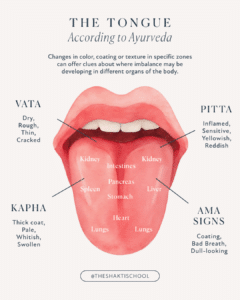
The Tongue According to Ayurveda

Blog Featured Image (1200 × 628 px) (1)

Your tongue is a living mirror of your body’s ecosystem. 👅🌀⁠
⁠
Ayurveda teaches that the tongue reflects digestion, detoxification, tissue health and even how well you’re processing life itself. ⁠
⁠
When your digestive fire - aka your agni - is strong, the tongue tends to look clear, pink and vibrant. ⁠
⁠
When things are sluggish or overloaded? The tongue often tells on us before our body does.⁠

👇🏼 Here are three daily rituals you can implement to take care of your AGNI and AMA and therefore your tongue (and really, all the systems of your body!)⁠

✨ Scrape your tongue! Tongue scraping gently removes overnight ama (toxins) and bacteria, supports fresher breath and gives your digestive fire a clean slate for the day.⁠
⁠
💧 Drink warm water with lemon in the morning. Warm water in the morning hydrates tissues, gently stimulates elimination and helps flush what the tongue scraping brings to the surface.⁠
⁠
🫖 Include spices in your diet. Support agni with warming spices like ginger, cinnamon or clove tea to kindle digestion so less residue accumulates in the first place.⁠
⁠
These small rituals have a radiant ripple effect. ⁠

Continue Reading

The Ultimate Kapha-Balancing Checklist for Late-Winter

Blog Featured Image (1200 × 628 px) (1)

It’s happening. We are FINALLY (slowly) beginning the transition out of winter and into late-winter/spring!

(All my Australia girls, y’all gotta do the opposite of what I’m about say in this email, you’re gonna wanna check out this podcast episode instead!)

Here’s the thing. People tend to think that winter and spring are really different seasons. But in reality, late-fall and early-winter are more alike than winter and late-winter!

Basically, late winter is sorta like a whole other season than winter! 

In late winter we start to get a much more watery experience than vata-dominant winter.

All of that firm holding, coldness and dryness of winter starts to release. Which means that Kapha season can bring with it feelings of heaviness and sluggishness, we can see more congestion and mucous-y conditions, and colds and the flu are on the rise. 

When out of balance, too much Kapha can make us feel a bit lazy and cause us to give in to our less-aligned desires, like over-eating and spending too much time Netflix-and-chilling. 

We want to honor and celebrate the life-affirming aspects of the season (like fluidity) but mitigate the dosha, the imbalances that arrive during this season. 

How do we do that? Don’t worry I gotchu 😉 Here’s my master list of Kapha-balancing lifestyle tips.

  1. Outdoor walks. Being outside is a great idea. Walking, especially if you have a lot of Kapha in your system or are the kapha body/mind type helps to get things moving.
  2. Spring cleaning. Start with one room in your house! Think about clearing out or redecorating! This is a great time to start a renovation, too.
  3. Making plan for the spring. This is a great time to plan a wedding, plan your business year ahead. The spring is really way more the “new year” than January, so get your plan on.
  4. Watch the tendency to pull out your spring lighter clothing! It’s important to still bundle up especially, in the beginning of spring. End of winter/early spring is when the damp quality builds up so we’re a little ripe for cold/mucous stuff.
  5. Get moving! The late winter/early spring (and continuing into spring) is such a good time to really party and let your energy move with a little more rigorous exercise! Jump rope, go on walks, mellow jogs, have fun with it! Winter is when we tend to put on a little bit more substance and that’s totally fine! Animals do this! And then in the wild, the greens start to shoot forth and they start to lose some of those hibernating fats.

If you've been feeling like you're waking up from winter hibernation... this is your Ayurvedic roadmap back to clarity, lightness and vitality. 🌿

⁠

Continue Reading

Ayurvedic Tips For Allergy Season

Blog Featured Image (1200 × 628 px) (1)

Two more of my fave supports for allergy season are quercetin (studies have shown that quercetin can prevent immune cells from releasing histamines which means runny nose, hives and swelling = bye bye 👋🏼) and Green Tea (‘cause it’s high in quercetin 😉). ⁠
⁠
Ayurveda understands that allergies are the result of an outer allergen aggravating a specific dosha. ⁣⁠Seasonal allergies related to spring (and sometimes fall) are usually more kapha-related.⁣⁠
⁣⁠
In order to aid our kapha allergies, we have to heat things up, boost circulation, clear out the channels of the body and support our system’s natural cleansing pathways (think lymph flow, circulation, digestion and elimination!).⁣⁠

Here are some more of my favorite tips for allergy season:

  • Get a Neti Pot and use it daily! Add ¼ tsp salt to warm water and pour through both nostrils.
  • Follow your Neti Pot with Nasya Oil to lubricate your nostrils with herbal oil.
  • Scrape your tongue. Scraping your tongue helps to remove the ama that your body is cleansing through the night.
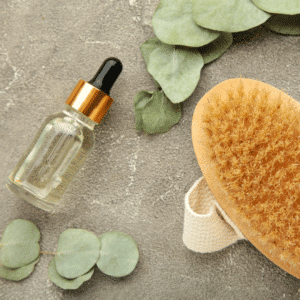
  • Dry Brush. Dry brushing boosts the lymphatic system–this helps the channels of the body circulate and eliminate toxins.
  • Drink your nettles. Nettles promote healthy circulation and activate the liver and kidneys. 

And if you really want to get ahead of things, start doing some of these practices before allergy season hits to improve your overall immunity. 🌸⁠

P.S. Here’s how I make my nettles infusion: Brew a tea by combining 4 large tablespoons of dried nettles in a mason jar with boiling water - let steep for 1 hour and then strain! Enjoy! 🌿

Continue Reading

How to Dry Brush the Ayurvedic Way

Blog Featured Image (1200 × 628 px) (1)

Why Dry Brush?

Dry Brushing (traditionally called garshana) helps move stagnation, stimulates Rasa Dhatu’s flow, boosts our natural detoxification system and gives the skin that GLOW we all want! 🌟⁠
⁠
In Ayurveda, our lymph is part of the Rasa Dhatu, one of the 7 tissues of the body.⁠
⁠
The lymph and blood plasma serve as the first line of immune defense when we encounter allergens and bacteria. Not only does the lymphatic system serve as immune defense, it also serves as psycho-emotional defense (AKA how easily we can let things roll off us, rather than deeply penetrate and wound us, on an emotional level). 🫀⁠
⁠
Unlike your blood, which is pumped throughout your body by your heart, your lymph relies on your body’s valve system to move, functioning more like a manual pumping system. This is where practices like dry brushing and Abhyanga come in - they help literally “pump” the lymph! 💪🏽⁠
⁠

Brush Towards the Heart

It's best to use a dry brush on dry skin before you take a bath or shower. Start at your feet and work your way upwards. Brush in a circular motion always in the direction of your heart. This will help increase blood flow throughout the body.

Follow Up with Moisture

Try to brush for at least 3 minutes working your way up to 5 minutes. After showering, make sure to lather yourself in some kind of amazing moisturizer or use your dry brush right before you Abhyanga, allowing the oil to be deeply absorbed into your revived skin.


Spring is an amazing time for dry brushing, boosting your body’s natural detoxification system and even giving you a freshened-up, more vigorous outlook on life. 😉

Continue Reading

Holistic Sun Protection and Summer Skincare Tips

This is a picture of a woman in a light white blouse holding her hand up to sheild her face from the sun. It links to a blog post about sun protection and summer skin care tips.

We are entering the late-summer season here in Virginia, and this can be a complicated time for skincare! On one hand, your skin requires more moisture from being dried out due to heat factors, which might also be making you sweat more, which oils up your skin. Throw sun exposure in there and you have a recipe for confusion and potential skin damage.

Don’t let the humidity fool you, even if you live in the tropics, air humidity cannot completely protect your skin from the drying effects of the sun (and the AC). Whatever your skin type, these sun protection and summer skincare protocols will help keep your skin in tip-top shape for the long haul.

Sun Protection From the Inside

Don’t Forget to Drink Water. Skin health starts with deep hydration. 

  • Aim to drink about 2 cups of water an hour. I recommend adding Trace Minerals, electrolytes, or one of these hydrating herbs to your water. These products changed the hydration game for me. 
  • Add a little Aloe Vera juice in the morning to your smoothie or drinking water for more cooling and hydration.
  • Avoiding diuretics like coffee will also help keep you hydrated. If it’s hot outside and the days are long, you might not even need coffee for that morning boost. Experiment with skipping it when the weather is warm. Instead, try drinking an energizing juice with vitamin C to give you a refreshing alkalizing boost in the morning.

Eat for the Sun. Make sure you’re getting Zinc and D3 in your diet. I recommend a liquid D3 supplement under the tongue for maximum absorption. Now you might be thinking: won’t I get vitamin D from the sun? Nope. What we get from the sun are the building blocks so that our body can produce vitamin D. And those special rays that help your body make vitamin D are only out when the sun is at a 30+ degree angle from where you are on Earth. You can use the app DMinder to find out when that vitamin D window is where you are in the world. 

What’s also important to keep in mind is that vitamin D3 offers skin protection and most people are low in Vitamin D3. It’s one of the only vitamins I recommend supplementing with regularly.

Some foods that also provide sun protection from oxidative damage are: polypodium leucotomos (a fern native to South America that you can find in some oral sun supplements), blueberries, carrots, watermelon, aloe, coconut oil, grapes, olive oil, avocados, sweet red peppers, sweet potatoes, sunflower seeds, guava, pomegranate.

Practice. Ayurveda teaches us that when the element of Fire is elevated, like during summer, we not only get physically hot and burnt out, but we’re also prone to heat-based emotions that are intense and sharp, like anger. Sitali breathing is a cooling breath exercise that's perfect for taking it down a notch. Sitala reduces Pitta dosha. I like doing this after a workout while I’m stretching, or when I’m lying down enjoying a face mask.

How to do Sitali Breathing

  • Close your eyes, breathe with awareness in your diaphragm for several minutes, then open the mouth and pucker your lips into an O shape.
  • Curl your tongue lengthwise and project it out of the mouth about 3/4 of an inch.
  • Inhale deeply across the tongue and into the mouth as if drinking through a straw. Notice how your breath feels cooler? Focus on that cool sensation on the tongue.
  • Withdraw the tongue and close the mouth, exhaling completely through the nostrils.
Blog Featured Image (1200 × 628 px) (1) copy

On your Skin

Exfoliate. Powdered coconut milk is a great exfoliant. If your skin is oiler, you can also try chickpea flour, almond flour or powdered honey.

Less is more. Avoid foundation and heavy blush and bronzer if you can, especially if you live in an area that’s already heavy (humid), in addition to being hot. Instead, reach for beautifying serums that have hyaluronic acid, vitamin C and polyphenols. Let your serum dry and then add a lightweight cream or oil. This summer I’ve been using Hanacure’s Nano Emulsion Cream. It’s lightweight enough that it doesn’t clog my pores or cause oiliness, but nourishing enough that it doesn’t leave my skin feeling exposed either. I like layering this under a nice face oil at night.

Cleanse. My skin dries out too easily for me to do mud masks year-round, but when I’m hot, humid and sweaty, my skin actually likes that drying effect that a mud mask provides. Here’s how to do one: Once a week, mix bentonite clay and a little activated charcoal with apple cider vinegar until you get a nice muddy consistency and slather on your face. You can even bring it down your neck and décollete to your breasts and underarms for a detoxing lymphatic mask. Let it completely dry and then rinse it off in the shower. Follow with a hydrating serum, lightweight cream or nourishing oil.

You can also try our Amalaki summer face mask recipe.

Nourish. My favorite summer oils are Rosehip seed oil and Carrot seed oil because they are light. Carrot seed oil also has the benefit of providing a little sun protection.

Protect. 1) Wear a hat & 2) Find a natural mineral sunscreen with zinc oxide and titanium dioxide. Be mindful not to over use sunscreen because it does reduce your body’s ability to make vitamin D3, which ironically you need for skin sun protection. I only wear sunscreen on places that have the most potential for damage: face, décollete, shoulders, upper arms, back of hands, around armpit and behind knees and elbows. I like using Life Extension Shade Factor Mineral Sunscreen in SPF 30.

Mist. This, hands down, is my favorite thing. Misting your face three to six times a day helps keep your skin moisturized (and is the most overlooked but important skincare routine!) and cools you off. Any natural face mister will work, it just requires purified water. Some have floral essence, aloe vera, essential oils and vitamin E; but unless my skin is burnt, I prefer the plain ones best, like the Evian Facial Spray (the fine mist this one emits is perfect). It’ll make you feel like a bougie old French woman (bonjour!), but a little goes a long way and your skin will show the difference. One bottle of Evian spray lasts me 6 months and I’m never found without one.

We hope you love these skincare and sun protection tips! For more practices, techniques and simple recipes for feeling both beautiful inside and out, check out our virtual Ayurvedic spa day workshop here. 

Continue Reading

How to do a Spring Cleanse

Blog Featured Image (1200 × 628 px)

Spring is the perfect time to do a gentle cleanse.

Ayurveda teaches us to mimic what is happening in the natural world. In Spring, the Earth’s core begins to heat up as fungi, bugs, insects, and bees make their way to the surface pollinating and helping to prepare the soil for the growth to come.

After many months enduring the cold and dampness of winter, it’s likely that some extra Kapha accumulation could be present. This can take the form of excess mucus in the lungs and sinuses, a possible accumulation of weight, or a feeling of lethargy or depression.

Thankfully, with the help of Ayurveda and the willingness to slightly shift up your routine you can be easing into that springtime flow in no time.

So, what does it mean to detox Ayurvedically?

Ayurveda does not suggest some kind of crazy fasting or overly-restrictive cleansing. In fact it’s quite the opposite.

An Ayurvedic cleanse is gentle.

What most of us actually need is something that can allow our body to deeply relax.

In order to “let go” of all the unwanted stuff inside of us, your body needs to know that you have the space to step away from your daily hustle and grind, to step into the parasympathetic nervous system and deeply relax.

This is why, for example, as part of an Ayurvedic cleanse, getting warm, medicated oil rubbed on you was always part of the cleansing protocol.

Blog Featured Image (1200 × 628 px) copy

For this simple cleanse I’m gonna share with you, it’s not at all about restricting food intake. 

It’s all about giving your body and digestion the space and time to deeply rest.

We have this idea in our culture that cleansing must be about suffering and penance and purification, Ayurvedic cleansing isn’t about any of those things. It’s about sweetness and love and slowing down. And saying to your body “I’m going to let you do what you need to do to come into balance.”

NOT using willpower to force our bodies to further the goals of the mind.

So I put together this little spring Kitchari recipe and simple cleansing protocol that’s a really easeful intro to Ayurvedic cleansing.

Plus there’s some more amazing resources below if you want to take it even deeper.

Get the Guide Here


Additional Cleansing Resources:

For Learning More About How to Do an Ayurvedic Cleanse:

Ep. 07 Spirit Sessions Podcast: Detox the Ayurveda Way

For a Guide to Spiritual Spring Cleaning:

Ep. 11 Spirit Sessions Podcast: Holy Shit, How to Become a Tantric House Witch 

For Boosting Your Elimination and Achieving “Poophoria”:

Ep. 46 Spirit Sessions Podcast: Poophoria: Getting Perfect ?!

Happy spring cleansing!

Continue Reading

Katie’s Seasonal Allergies Arsenal

Blog Featured Image (1200 × 628 px)

We are currently being overloaded with pollen over here (if you’re on the East Coast in the US at least 😉) and it’s got me thinking about how we can all navigate allergy season with a little more support…⁣⁠
⁣⁠
Allergies are a typical imbalance associated with Kapha season (aka SPRING) 💐⁣⁠
⁣⁠
Ayurveda understands that allergies are the result of an outer allergen aggravating a specific dosha. ⁣⁠
⁣⁠
So, Ayurveda breaks allergies into Vata, Pitta, and Kapha-type allergies.⁣⁠ (And no, this isn’t based on your constitution, it’s based on the specific allergen that’s irritating your system!)⁣⁠ Seasonal allergies related to spring (and sometimes Fall) are usually more Kapha-related.⁣⁠
⁣⁠
An excess of Kapha dosha brings sluggishness, mucous and water retention (read: allergy symptoms). ⁣⁠
⁣⁠
In order to aid our Kapha seasonal allergies, we have to heat things up, boost circulation, clear out and CLEANSE our bodies’ pathways.⁣⁠
⁣⁠
Allergies don’t have to be your destiny.⁣⁠ Reducing the effects of allergies comes down to boosting agni + reducing ama + supporting immunity. ⁣⁠
⁣⁠
To reduce the uncomfortable symptoms of allergies we have to CLEAR OUT OUR SROTAS! Srotas are the circulation channels of the body–these channels are where ama gets STUCK, resulting in imbalances. ⁣⁠
⁣⁠
See below for my arsenal and reference this for future seasonal allergies attacks!

👃🏽 Nose care: Neti & Nasya! Add ¼ tsp salt to warm water and pour through both nostrils using a neti pot, then lubricate your nostrils with herbal nasya oil!

👅 Scrape your tongue! If you aren’t on the tongue scraping train START ASAP–this helps to remove the toxins that your body is cleansing through the night.

🌀 Dry Brush. Boosts the lymphatic system, helps the channels of the body circulate and eliminate toxins.

🌿 Triphala + Turmeric. Triphala will help boost digestion and reduce ama (the source of allergies) while Turmeric is one of the best anti-inflammatory, anti-ama herbs.

🫖 Nettles. Nettles are your circulation-boosting, ama-clearing, waste-cleansing BFF. Brew a tea by combining 4 large tablespoons of dried nettles in a mason jar with boiling water - let steep for 1 hour and then strain!

🍒 Quercetin! Quercetin is a powerful antioxidant with amazing anti-inflammatory powers. Studies have shown that quercetin can prevent immune cells from releasing histamines which means runny nose, hives, swelling = bye bye 👋🏼

🍵 GREEN TEA. Because it’s super high in quercetin, it helps to reduce the body’s immune response to allergies like pollen!

For more information, check out our podcast on allergies here.

Continue Reading

Hair Oiling 101

Blog Featured Image (1200 × 628 px)

There’s nothing like a weekly hair-oiling ritual to reset your system while communicating deep, loving, self-care to your own heart. So I wanna share with you some of my favorite herbs and tips for oiling your luscious locks!⁣

How to Prep for Oiling Your Hair:

  • Use a dosha-appropriate, high quality oil like sesame oil for Vata hair, coconut oil for Pitta hair, and olive oil for Kapha hair. To simplify, use the Banyan hair oil (use code below for a discount) which is an amazing hair formulation and the one I personally use!
  • You want the oil warm, not too hot. I like to warm my oil by filling up the sink with warm water and placing the bottle of oil in the sink to warm for a few minutes.

Hair Oiling Instructions:

  • Begin to massage the oil into your scalp using your hands. Make sure to cover the entire scalp while massaging your head for circulation and stimulation of marma points. End by pulling a little bit of oil through the length of your hair.
  • Leave the oil on for a few hours or overnight. You may need to wrap your head in a towel you don’t mind getting oil-stained or laying down a designated oiling towel over your pillow for sleep.
  • Give your hair a full wash after letting the oil sit overnight. It might take a double wash to fully cleanse the oil out.

Pro tip for rinsing: Try shampooing/scrubbing your DRY (still oily) hair before getting into the shower and getting your hair wet for optimum scrubbing results!⁣

⁣
The hair oil I’ve been using forever is the Banyan Botanicals Hair oil! Use the code Katie15 if you wanna discount!

Continue Reading
  • Page 1
  • Page 2
  • Page 3
  • Interim pages omitted …
  • Page 10
  • Go to Next Page »

Footer Hero Widget

theshaktischool

TheShaktiSchool

In the latest episode of Spirit Sessions Podcast, In the latest episode of Spirit Sessions Podcast, I do a deep download on erythritol. You may have never heard of this chemical but it is a sweetener lurking inside so many of the “clean,” “keto,” and even “stevia” products we’ve been told are better for us. 

Think bubbly waters, protein bars and powders, energy drinks that are sold as more health-conscious, even the “healthiest” electrolytes on the market. 

You may be eating and drinking way more of this than you realize. I was! 

This podcast episode is short and sweet and offers a deep dive into both the recent science and the Ayurvedic agreement around it. 

I hope it helps us all come back to intelligent sweetness. 

Sweetly yours,
Katie 💗

🌿🎧 Comment “244” below for the link to the episode.
We’re so excited to share that on June 11th, our We’re so excited to share that on June 11th, our Level 1 Ayurvedic Wellness Coach Certification students will receive a special bonus class with Amanda Ree of Sama Dog Wellbeing. 🐶🌿✨⁠
⁠
For the dog mamas in our community, this is such an exciting opportunity to explore the role of Ayurveda in the relationships we share with our pets and how we can support our pets’ individual constitutions. We can’t wait for students to experience Amanda’s warmth, wisdom and unique perspective on supporting animals through a holistic lens!⁠
⁠
In this class, students will learn:⁠
⁠
• How Ayurvedic principles and the doshas can be applied to dogs and other animals⁠
• How to identify signs of Vata, Pitta and Kapha imbalance in pets⁠
• Practical ways to support animals through routines, environment, grounding, and sensory experiences⁠
• Holistic tools to support animal wellbeing like mindfulness practices, flower essences and more⁠
⁠
Amanda Ree is an Ayurvedic practitioner and educator with over 25 years of experience, and the founder of Sama Dog and Sama Circle - a space devoted to helping people care for their dogs through a more natural, holistic, and deeply connected approach.⁠
⁠
Her work brings together Ayurvedic principles, modern wellness and a profound respect for the emotional and spiritual bond between humans and animals. A lead educator within the Chopra Center for many years, Amanda brings extensive training in yoga, meditation, and conscious living to her work — developing a perspective on canine care that goes beyond symptom management, guiding dog guardians to understand the full picture of their dog's health across body, mind and spirit.⁠
⁠
Amanda is also a Canine Wellness Practitioner and Animal Chaplain, bringing a rare combination of ancient wisdom and compassionate presence to the humans and animals she serves.⁠
⁠
🌹 Shakti students, tell us your pet’s name and what you’re most looking forward to learning from this class down below! 🐾
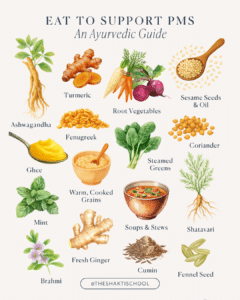
Ayurveda views premenstrual symptoms as the manife Ayurveda views premenstrual symptoms as the manifestation of a doshic imbalance. Menstrual symptoms can reflect imbalance in any of the doshas, but typically, the premenstrual period is linked to vata and pitta dosha—things can get too dry, too heated or too emotional.⁠
⁠
It’s especially important to tend to vata dosha during the luteal phase, the couple of weeks that precede your bleed. Tending to vata during this time means grounding, stabilizing and soothing the nervous system. ⁠
⁠
Here are some Ayurvedic recommendations for your luteal phase:⁠
⁠
🍠 Eating For Your Luteal Phase⁠
⁠
• Root vegetables - Carrots, parsnips, beets and sweet potatoes are deeply nourishing and grounding, helping to counter vata anxiety ⁠
• Ghee and healthy fats - Supports healthy hormones and nutrient absorption⁠
• Steamed greens - Leafy greens offer vital nutrients and their bitterness and astringent qualities counter pitta’s heat⁠
• Warm, cooked grains - Steady nourishment for smooth digestion and steady agni⁠
• Soups and stews - Supports digestion and the nervous system at the same time—also beneficial for kapha types and kapha imbalances⁠
⁠
🌿 Supportive Herbs & Spices⁠
⁠
• Turmeric - Helps support the body’s detoxification pathways, aiding hormone regulation⁠
• Ginger - Kindles agni and steadies digestion⁠
• Ashwagandha - Provides essential nervous system steadiness through emotional waves⁠
• Shatavari - Supports women’s hormonal balance; is cooling and moistening⁠
• Brahmi - An Ayurvedic herb known for supporting mental ease and balance⁠
• Cumin - Digestive aid soothing vata (aka goodbye gassiness!)⁠
• Fennel - Cooling digestive support that helps reduce both vata and pitta ⁠
• Coriander - Pitta-reducing to help mitigate irritability and excess heat⁠
• Sesame Seeds - Contain essential minerals and fatty acids that promote hormonal balance⁠
• Fenugreek - Anti-inflammatory qualities may help ease menstrual discomfort⁠
• Mint - Helps to cool and aid digestion, balancing both pitta and vata⁠
⁠
🥀 Save for your next grocery trip during your luteal phase! And if you’re ready for more, comment WISDOM to access our free Divine Feminine Ayurveda course now.
Are you ready to embrace another year of healing, Are you ready to embrace another year of healing, spirit and transformation that fits seamlessly into your busy life? ⁠
⁠
We've gotten started with a couple amazing classes, alongside a beautiful community of women, that are waiting for you as soon as you sign up!⁠
⁠
Level 2 is so special because it’s a much smaller group - this means more opportunity to get to know your cohort (aka Ayurveda best-gal-pals) and the teachers. A more intimate group really gives Level 2 a distinct feel that we absolutely love. And of course, the opportunity to take your studies to the next level!⁠
⁠
Our 2026 Level 2 classes are now in session, and you can start immediately! The first couple of classes of the year are in the Shakti classroom now, waiting for you. Don't miss this opportunity to integrate all that you learned in Level 1 and go deeper into your practice.⁠
⁠
The doors will soon close until 2027... if you've been considering deepening your learning, connecting with an incredible community and supporting your own healing, join us today. 🦋🗝️
Ayurveda doesn’t separate the body into isolated Ayurveda doesn’t separate the body into isolated systems. When you support digestion, you support hormones. When you calm inflammation, you calm the mind. These herbs are working on multiple layers at once, gently guiding the body back into balance.

Here are some foundational herbal helpers to keep in mind for common imbalances:

🫚 For digestion:
• Triphala cleanses, tones the gut and supports elimination
• Trikatu is hot, sharp and activating, cutting through ama
• Hing is pungent and penetrating, breaking up gas and stagnation
• Ginger is warming, helping digestion come online
• Ajwain is a carminative, clearing bloating from the digestive tract

🌿 For inflammation:
• Turmeric moves through the blood, helping clear heat and stagnation
• Guduchi is cooling, restorative and calming
• Amalaki is rejuvenative and cooling, supporting the blood and skin
• Licorice is sweet and soothing, coating irritated tissues and calming the gut and lungs
• Aloe vera is cooling and moistening, pulling heat out of the system

🌀For the nervous system:
• Ashwagandha is grounding, stabilizing and supports the stress response
• Shankhpushpi is calming, clarifying and helps ease anxiety
• Jatamansi helps settle excess vata and support emotional regulation

🧠For mental clarity:
• Brahmi is light and sattvic, clearing mental fog and supporting memory and focus
• Gotu kola supports circulation to the brain, helping create steady, grounded clarity
• Saffron is subtle and uplifting, supporting mood and perception
• Tulsi clears the mind and invigorates the respiratory system, increasing alertness
• Rosemary is aromatic and stimulating, helping wake up the mind and sharpen concentration

🌹 If you’re ready to dive deeper into this work, comment WISDOM for our free Women’s Wisdom and Ayurveda mini-course. 

✨ Calling all Level 1 Graduates - the first classes of our Level 2 Ayurvedic Health Counselor Training are waiting for you inside the virtual classroom and this is the final call to get in the door. Comment “LEVEL2” (one word) to learn more.

Footer

© 2026 Shakti School

  • FAQ
  • Privacy Policy
  • Terms and Conditions
  • Advocacy
  • Find a Coach
  • Login
  • Katie's Books
  • Contact and Support

Get the Shakti Letter love, katie