• Skip to main content

The Shakti School

Feminine Form Sacred Technology

  • About
  • Blog
  • Glow-Worthy
  • Ayurveda
  • Subscribe
  • Podcast
  • Book a Call
  • Free Course
  •  
Food, Herbs

What Your Gut is Trying to Tell Your Heart

What your gut is trying to tell your heart - Understanding your emotions and what they mean for your health.

Understanding your emotions and what they mean for your health

A gut feeling is an instinctive, intuitive feeling, without any logical rationale. It’s very common to hear people using the saying gut feeling, but on what level do we really understand the connection between the gut and our emotions? How often are you treating your heart’s longings for an issue you may be experiencing in your digestion? With the ongoing amount of research and development on the inner workings of the microbiome, there are hundreds of ways to help to create a healthy gut. Especially when we turn to Ayurveda. Ayurveda is all about healing the digestive system and the practices, dietary guidelines and herbal remedies have been meticulously put together for thousands and thousands of years to do just that, so why doesn’t it always work? 

The digestive system has its own nervous system, called the enteric nervous system. It has over 100 million nerve endings and in many ways, it can control digestion independently without your conscious awareness. The enteric nervous system has been nicknamed our "second brain.” This gut-brain is intimately connected to our "big brain" via a network of nerve pathways and the two nervous systems share many of the same neurotransmitters to facilitate communication. In fact, 95 percent of serotonin is found in the gut! This bidirectional pathway is referred to as the brain-gut axis and involves moment-to-moment communication to control digestion. Loyolamedicine

The gut-brain is intimately connected to our "big brain" via a network of nerve pathways and the two nervous systems share many of the same neurotransmitters to facilitate communication.

The gut-brain communication is so closely linked that when we experience a state of dis-ease, stress, heart ache or any other negative emotion that feeling gets signaled through bidirectional nerve pathways to the gut that then causes an upset or imbalance. In return, if such emotions aren’t addressed the gut can then take on the problem and send its own signal to the brain causing a vicious cycle of imbalance and possibly some unwanted digestive issues. 

So, how do we become more connected to the instinctual and intuitive gut feeling when it comes to the matters of the heart? It starts with getting to your Self and falling in love with your Self. Katie talks a lot about self love (especially in Ayurveda School) and has defined it by how capacious we are at actually liking our funny, quirky, silly little inner child. Self-love happens when we know who she is, how she’s been hurt, and when we are gentle with her through the steps towards healing. 

Self love is also about taking the time to listen and the space to feel. When we don’t give ourselves enough space, solitude, and quiet it’s more difficult to tap into our inner wise woman-- this is the woman who has a healthy gut! Have you ever noticed that when you are relaxed and in a place that makes you happy surrounded by people you feel at ease with (often happens on long vacations) magically your gut issues seem to improve? We are unable to tap into the depths of our wisdom and the place of true self love when we are in a constant state of fight or flight.

Seek out ways to ground yourself. Do the practices that help you feel the most relaxed. Breathe in self love with every breath. Practice daily meditations, affirmations, or prayer. Be in the arms of nature. Do not give up on yourself and stay diligent with monitoring how you speak to your Self. And, consider joining us in Ayurveda School 2022 where we will discuss ALL about the gut, brain, and heart connection and so much more.

Greens for the Gut & Potatoes for the Heart
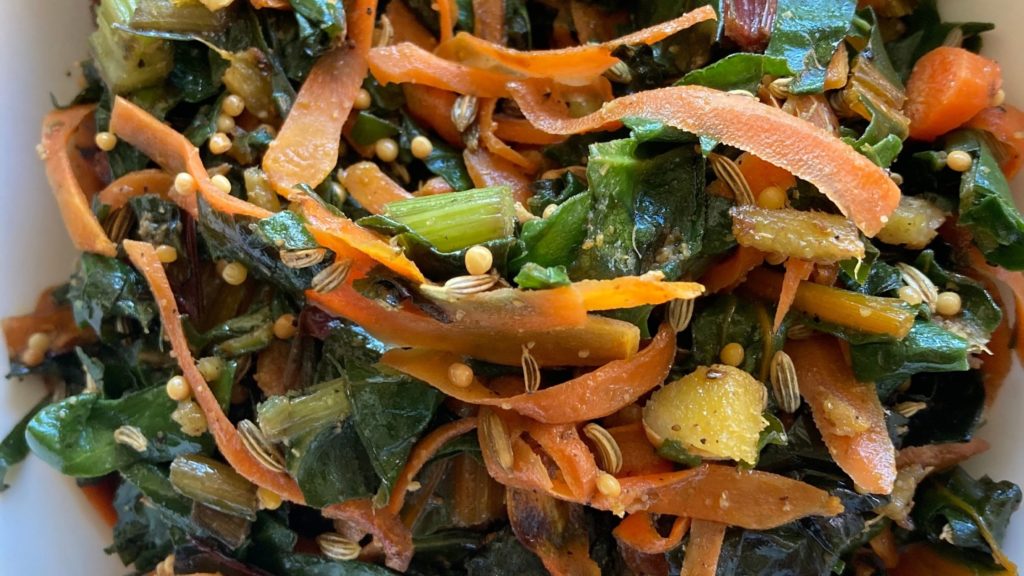
An Ayurvedic Green Recipe for Gut Health.

For the Greens

1 large bunch of dandelion (finely chopped)

1 cup of finely chopped kale (or any other green of your choice)

1 tbsp fresh ginger (diced)

1 tbsp of olive oil or ghee

Salt & pepper to taste

Directions

In a medium sized saute pan over medium heat, add the oil and spices, and let simmer for a few minutes. Next, add the greens and cover with a lid. Let the greens cook for about 15 minutes while periodically stirring and covering with the lid. If the greens are sticking you can add a little water (this will also help to steam the greens). 


For the Potatoes

1 cup of fingerling potatoes (halved)

1 tbsp ghee

1 tsp mustard seeds

1 tsp cumin seeds

1 tbsp rosemary (fresh or dried) 

Salt and pepper to taste

Directions

Add all ingredients to a mixing bowl and mix until the potatoes are completely covered with the oil and spices. Next, transfer to a baking sheet lined with parchment paper and bake for 20 minutes at 400 degrees. (Option to do in a saute pan: follow the same directions as for the greens) 

The greens and potatoes are great on their own, but feel free to top with your favorite protein source to make this a complete meal. 
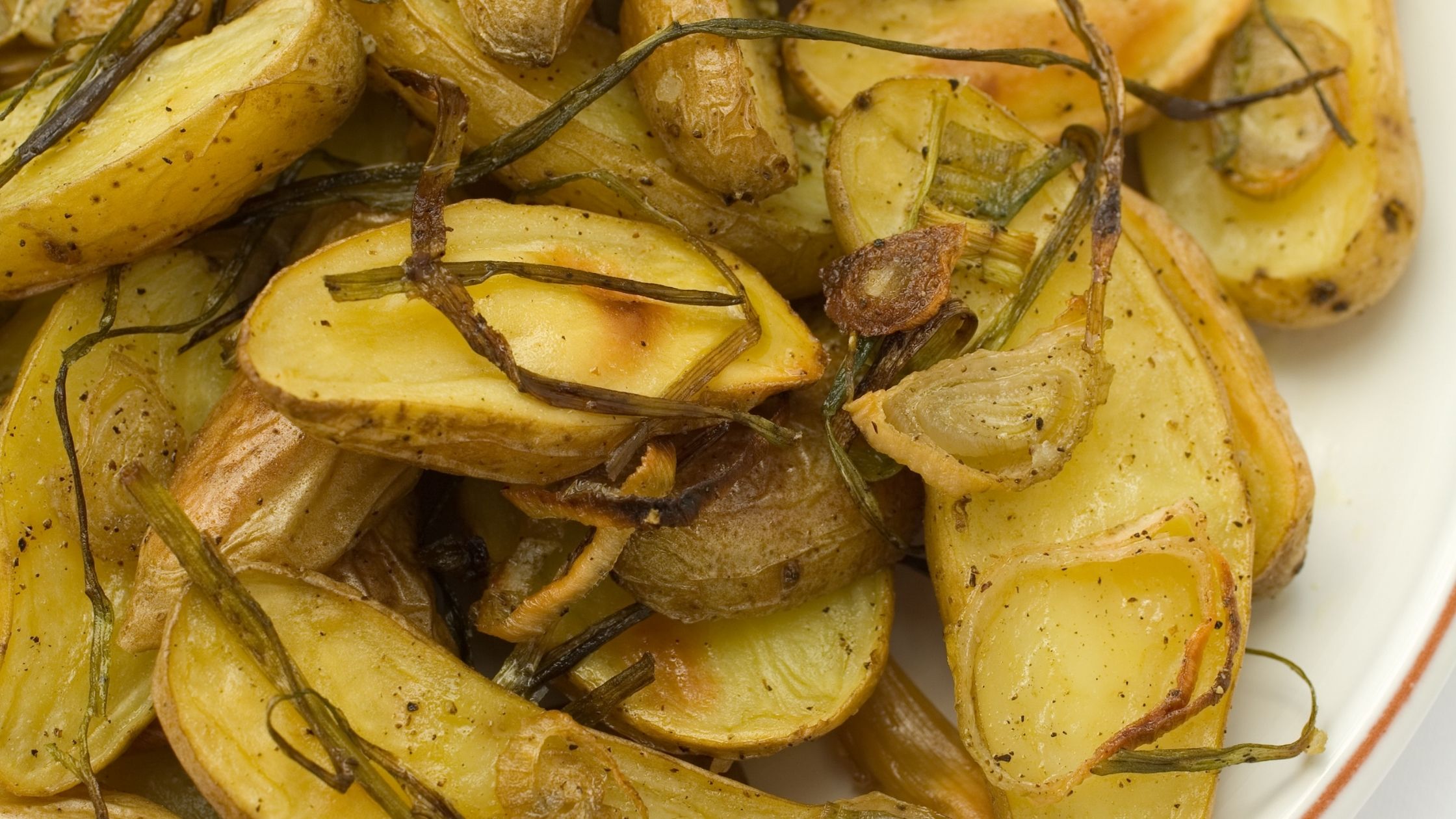
Potato recipe for the hearth.

Footer Hero Widget

theshaktischool

TheShaktiSchool

The purpose of alchemizing our pain is not perfect The purpose of alchemizing our pain is not perfection. In fact, it can be incredibly liberating to free ourselves from the idea that we will ever be perfectly healed—the idea that we will ever NOT have a certain amount of discomfort and suffering in our lives.

I remember having my heart cracked open when I learned about the Hindu goddess Akhilandeshvari, She Who Is Never Not Broken. 

She is the keeper of the realm of hearts broken, dreams unachieved, and promises unkept. She is with us when we fall into a snotty ball on our bed, unable to keep the sobs from engulfing us. 

She is the opposite of “Move on,” “Just get over it,” and “Oh, come on, it could be worse.” She allows us to be with our feelings until they naturally transform. 

She exists within us, constantly gathering the broken pieces of us back into her. 

And although she is always broken, her face is peaceful because she knows an important secret: that she is always there with us, coexisting alongside the pain. 

And She Who Is Never Not Broken is one of the biggest keys to accessing our true inner glow, in that she allows all the rusted, grimy, broken, roughed-up parts of us to be held in the warm gaze of her message: You can be here.

These double-edged goddesses teach us the beautiful and often painful lesson of the tension of the opposites. 

Can you embody these goddesses by holding the paradox of life, knowing that both brokenness and wholeness may always be operating in our lives?

🙏🏼 Meme by @healdotme
This is a milky beverage that counteracts insomnia This is a milky beverage that counteracts insomnia and nervousness before bed. 

Ayurveda provides nourishing and grounding remedies that help settle both body and mind. 🌀☁️

Warm milk is traditionally used as an ojas-building tonic that supports deep restoration, while valerian helps calm the nervous system, ashwagandha supports stress resilience, nutmeg is used for its gently sedative qualities, and saffron eases the mind toward rest. 🫖

When taken together, you have a soothing ritual that reduces excess movement in the mind and invites deep ease before bedtime. 🌙

You can also enhance the effects of this milky medicine by rubbing some warm sesame oil and a few drops of jatamansi essential oil on the soles of your feet before covering them in socks.

🌬️Ready to learn more Ayurvedic wisdom for soothing the mind, body and nervous system? Comment SOMATIC for my free class, Healing the Nervous System with Somatic Ayurveda.
In the latest episode of Spirit Sessions Podcast, In the latest episode of Spirit Sessions Podcast, I do a deep download on erythritol. You may have never heard of this chemical but it is a sweetener lurking inside so many of the “clean,” “keto,” and even “stevia” products we’ve been told are better for us. 

Think bubbly waters, protein bars and powders, energy drinks that are sold as more health-conscious, even the “healthiest” electrolytes on the market. 

You may be eating and drinking way more of this than you realize. I was! 

This podcast episode is short and sweet and offers a deep dive into both the recent science and the Ayurvedic agreement around it. 

I hope it helps us all come back to intelligent sweetness. 

Sweetly yours,
Katie 💗

🌿🎧 Comment “244” below for the link to the episode.
We’re so excited to share that on June 11th, our We’re so excited to share that on June 11th, our Level 1 Ayurvedic Wellness Coach Certification students will receive a special bonus class with Amanda Ree of Sama Dog Wellbeing. 🐶🌿✨⁠
⁠
For the dog mamas in our community, this is such an exciting opportunity to explore the role of Ayurveda in the relationships we share with our pets and how we can support our pets’ individual constitutions. We can’t wait for students to experience Amanda’s warmth, wisdom and unique perspective on supporting animals through a holistic lens!⁠
⁠
In this class, students will learn:⁠
⁠
• How Ayurvedic principles and the doshas can be applied to dogs and other animals⁠
• How to identify signs of Vata, Pitta and Kapha imbalance in pets⁠
• Practical ways to support animals through routines, environment, grounding, and sensory experiences⁠
• Holistic tools to support animal wellbeing like mindfulness practices, flower essences and more⁠
⁠
Amanda Ree is an Ayurvedic practitioner and educator with over 25 years of experience, and the founder of Sama Dog and Sama Circle - a space devoted to helping people care for their dogs through a more natural, holistic, and deeply connected approach.⁠
⁠
Her work brings together Ayurvedic principles, modern wellness and a profound respect for the emotional and spiritual bond between humans and animals. A lead educator within the Chopra Center for many years, Amanda brings extensive training in yoga, meditation, and conscious living to her work — developing a perspective on canine care that goes beyond symptom management, guiding dog guardians to understand the full picture of their dog's health across body, mind and spirit.⁠
⁠
Amanda is also a Canine Wellness Practitioner and Animal Chaplain, bringing a rare combination of ancient wisdom and compassionate presence to the humans and animals she serves.⁠
⁠
🌹 Shakti students, tell us your pet’s name and what you’re most looking forward to learning from this class down below! 🐾
Ayurveda views premenstrual symptoms as the manife Ayurveda views premenstrual symptoms as the manifestation of a doshic imbalance. Menstrual symptoms can reflect imbalance in any of the doshas, but typically, the premenstrual period is linked to vata and pitta dosha—things can get too dry, too heated or too emotional.⁠
⁠
It’s especially important to tend to vata dosha during the luteal phase, the couple of weeks that precede your bleed. Tending to vata during this time means grounding, stabilizing and soothing the nervous system. ⁠
⁠
Here are some Ayurvedic recommendations for your luteal phase:⁠
⁠
🍠 Eating For Your Luteal Phase⁠
⁠
• Root vegetables - Carrots, parsnips, beets and sweet potatoes are deeply nourishing and grounding, helping to counter vata anxiety ⁠
• Ghee and healthy fats - Supports healthy hormones and nutrient absorption⁠
• Steamed greens - Leafy greens offer vital nutrients and their bitterness and astringent qualities counter pitta’s heat⁠
• Warm, cooked grains - Steady nourishment for smooth digestion and steady agni⁠
• Soups and stews - Supports digestion and the nervous system at the same time—also beneficial for kapha types and kapha imbalances⁠
⁠
🌿 Supportive Herbs & Spices⁠
⁠
• Turmeric - Helps support the body’s detoxification pathways, aiding hormone regulation⁠
• Ginger - Kindles agni and steadies digestion⁠
• Ashwagandha - Provides essential nervous system steadiness through emotional waves⁠
• Shatavari - Supports women’s hormonal balance; is cooling and moistening⁠
• Brahmi - An Ayurvedic herb known for supporting mental ease and balance⁠
• Cumin - Digestive aid soothing vata (aka goodbye gassiness!)⁠
• Fennel - Cooling digestive support that helps reduce both vata and pitta ⁠
• Coriander - Pitta-reducing to help mitigate irritability and excess heat⁠
• Sesame Seeds - Contain essential minerals and fatty acids that promote hormonal balance⁠
• Fenugreek - Anti-inflammatory qualities may help ease menstrual discomfort⁠
• Mint - Helps to cool and aid digestion, balancing both pitta and vata⁠
⁠
🥀 Save for your next grocery trip during your luteal phase! And if you’re ready for more, comment WISDOM to access our free Divine Feminine Ayurveda course now.

Footer

© 2026 Shakti School

  • FAQ
  • Privacy Policy
  • Terms and Conditions
  • Advocacy
  • Find a Coach
  • Login
  • Katie's Books
  • Contact and Support

Get the Shakti Letter love, katie